
Introduction
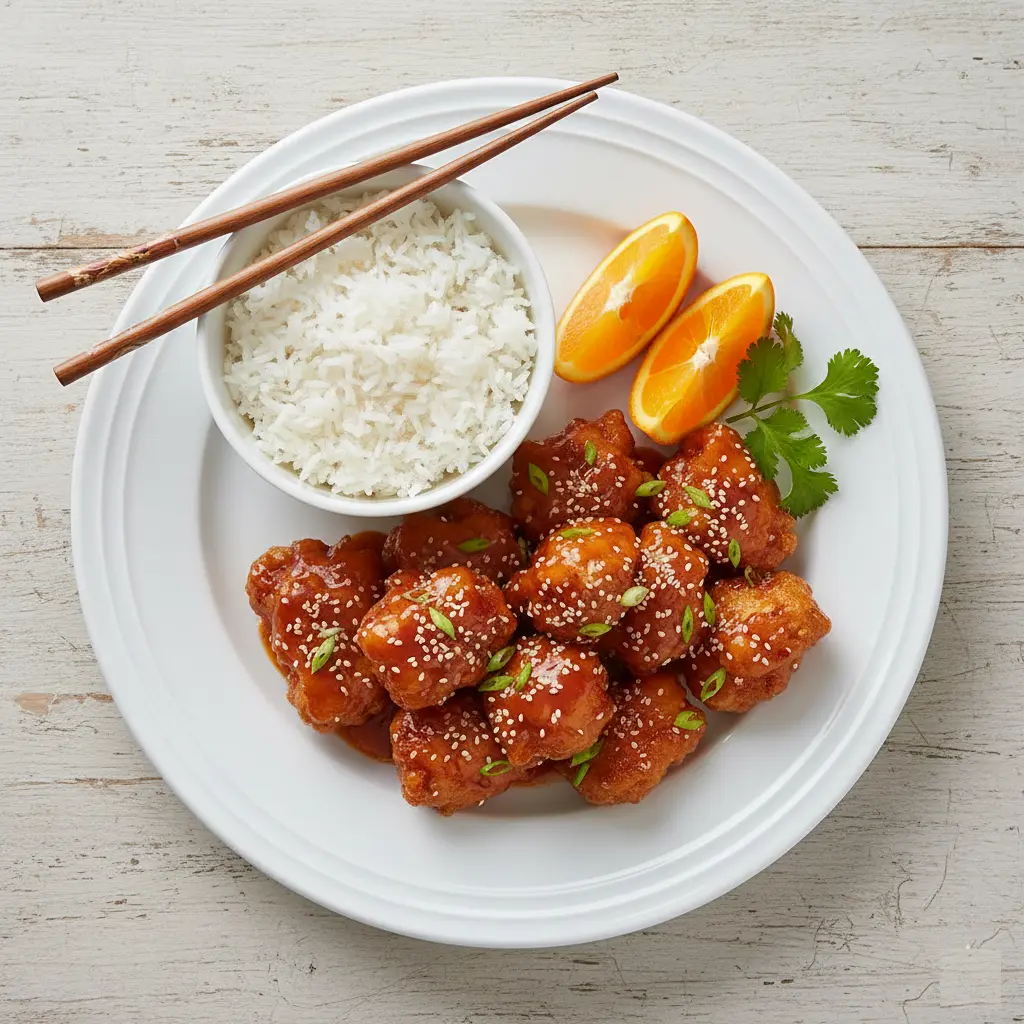
Orange chicken bursts with sweet, tangy, citrusy flavor and crisp edges. It evokes takeout nostalgia while being totally doable at home. Whether you’re craving a cozy weeknight dinner or want something to impress, this dish delivers. Let’s walk through what makes orange chicken so beloved, and how you can master it in your kitchen with confidence.
Reasons You’ll Love Orange Chicken
You’ll love this orange chicken recipe because it blends crisp, golden chicken with a sticky, flavorful orange glaze that dances on your tongue. It’s a win for texture and taste, crunchy and saucy. Plus, it’s customizable: want extra heat, go for red pepper flakes; want lighter, choose air-fried. It also comes together quickly, so you won’t be stuck in the kitchen all evening. And best of all, making it yourself means clean ingredients, no mystery additives, and a great reason to show off to family or friends.
What Makes a Good Orange Chicken
A standout orange chicken must balance sweetness, acidity, and a touch of heat. The sauce should cling to the chicken, not slide off. The chicken itself should remain crispy (or at least firm) under the sauce rather than soggy. You need real citrus tone, zest or fresh orange juice, not just sugar. A good version also layers aromatics like garlic and ginger so the flavor isn’t flat.
Cultural Significance of Orange Chicken
Orange chicken sits squarely in Chinese-American cuisine. It doesn’t trace directly to traditional Chinese recipes so much as it represents how immigrant communities adapted flavors for American palates. Over time, it became a staple in takeout menus across the U.S. While not “authentic” in the classical sense, it speaks to hybrid identities and evolving food traditions in diaspora communities.
History of Orange Chicken
Though its roots may reflect older Chinese citrus-peel dishes, the modern orange chicken we know was popularized in the late 1980s. Panda Express, a Chinese-American fast casual chain, credits chef Andy Kao, who introduced a version in Hawaii in 1987 using battered, boneless chicken and a sweet orange glaze.
Traditional Chinese “tangerine chicken” or 陈皮鸡 (dry citrus peel chicken) may have influenced the idea, but that earlier dish is quite different in preparation and flavor profile. Wikipedia
Over the decades, orange chicken became one of the signature dishes of Chinese-American dining, emblematic of adaptation, fusion, and mass appeal.
Ingredients
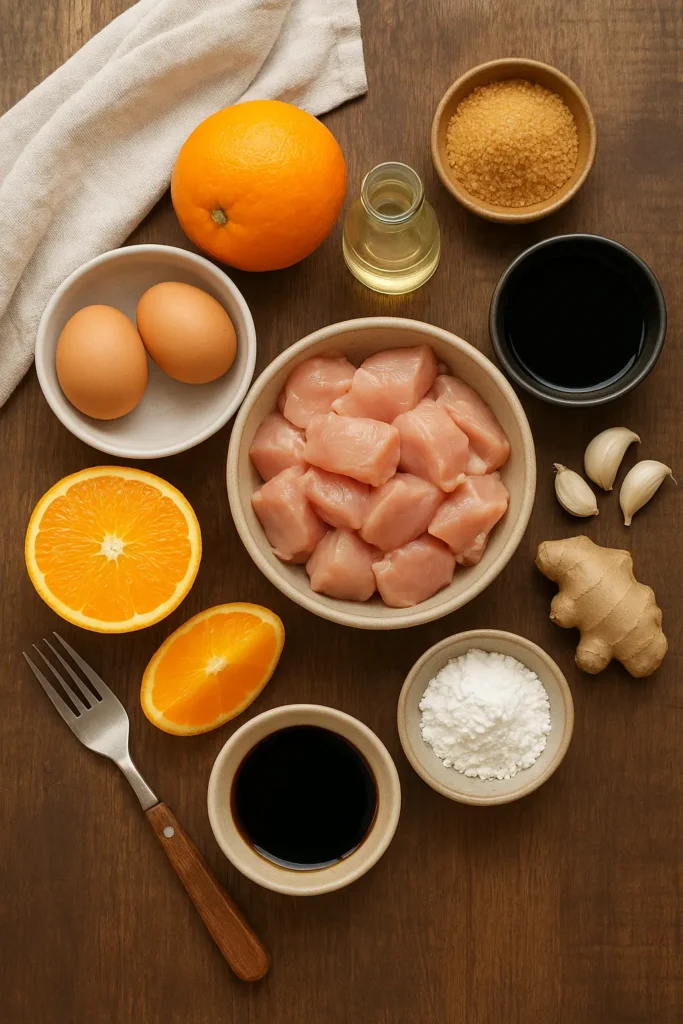
Here’s a solid ingredient list to make orange chicken at home. You can adjust based on preferences:
Chicken & Coating
- 1.5 lb boneless, skinless chicken thighs or breasts, cut into bite-size pieces
- 2 large eggs, whisked
- ½ cup cornstarch (or mixture of cornstarch + flour)
- Salt & pepper to season
- Oil for frying (vegetable, peanut, or neutral oil)
Orange Sauce
- ¾ to 1 cup fresh orange juice (or more for brightness)
- Zest of one orange (or dried citrus peel in traditional versions)
- 2–3 Tbsp rice vinegar (or white vinegar)
- 3 Tbsp brown sugar (or mixture of sugar + sweetener)
- 2 Tbsp soy sauce
- 1 Tbsp fresh grated ginger
- 2 garlic cloves, minced
- Pinch red chili flakes (optional for heat)
- Cornstarch slurry (1 Tbsp cornstarch + water) to thicken sauce
Garnish (optional but recommended)
- Sliced green onions / scallions
- Extra orange zest
- Sesame seeds (optional)
Instructions
Here’s the step-by-step method to make orange chicken. Prep ahead, work efficiently, and you’ll get great results.
- Prep everything first: cut chicken into bite-size cubes, zest the orange, juice it, mince garlic and ginger, and whisk eggs. Mix your sauce ingredients in one bowl (juice, sugar, vinegar, soy, zest, ginger, garlic, chili flakes) so it’s ready.
- Season the chicken pieces with a little salt and pepper.
- In a bowl, coat chicken with cornstarch (or cornstarch + flour). It should cling to the surface. For extra crispness, you can double dredge (egg → starch → egg → starch).
- Heat oil in a wok or deep skillet over medium-high heat. The oil should reach about 350 °F (175 °C) for frying.
- Fry chicken in batches so you don’t overcrowd. Fry until golden and crisp, about 2–3 minutes per batch. Remove and let drain on paper towels.
- In a separate saucepan or same skillet (wipe clean), place the sauce mixture and bring it to a simmer over medium heat. Give it a minute or two to meld flavors.
- Prepare a cornstarch slurry (mix cornstarch + water) and whisk it into the simmering sauce. Let it thicken, stirring constantly, until it reaches a glossy consistency.
- Toss the fried chicken pieces in the sauce until each piece is coated.
- Garnish with green onions, extra orange zest, sesame seeds if using.
- Serve immediately over steamed rice, fried rice, or noodles.

Orange Chicken Recipe
Cuisine: Chinese-AmericanDifficulty: Medium4
servings20
minutes25
minutes380
kcalIngredients
- For the Chicken:
1.5 lb boneless, skinless chicken thighs or breasts, cut into bite-size pieces
2 large eggs, whisked
1/2 cup cornstarch (or mix with flour for extra crunch)
Salt and black pepper to taste
Vegetable or peanut oil for frying
- For the Orange Sauce:
3/4 cup fresh orange juice
Zest of one orange
3 tbsp brown sugar
2 tbsp soy sauce
2 tbsp rice vinegar
1 tbsp grated fresh ginger
2 cloves garlic, minced
1/4 tsp red chili flakes (optional)
1 tbsp cornstarch mixed with 2 tbsp water (slurry)
- For Garnish:
Sliced green onions
Orange zest
Sesame seeds (optional)
Directions
- Instructions:
- Cut chicken into bite-sized cubes and season with salt and pepper.
- Coat pieces in cornstarch, dip in egg, and re-coat with starch if desired for extra crispiness.
- Heat oil to 350°F (175°C) and fry chicken in small batches until golden and crisp, 2–3 minutes per batch. Drain on paper towels.
- In a separate skillet, whisk together orange juice, zest, soy sauce, sugar, vinegar, garlic, ginger, and chili flakes. Bring to a simmer.
- Stir in the cornstarch slurry and simmer until the sauce thickens and becomes glossy.
- Toss the fried chicken in the sauce until evenly coated.
- Garnish with scallions, sesame seeds, and extra orange zest. Serve hot over rice or noodles.
- Equipment:
Wok or deep skillet
Mixing bowls
Tongs
Saucepan
Notes
- -Air fry or bake for a lighter version.
-Sauce can be prepared a day ahead.
-To keep chicken crisp, toss in sauce only before serving.
How to Tell When Orange Chicken Is Done
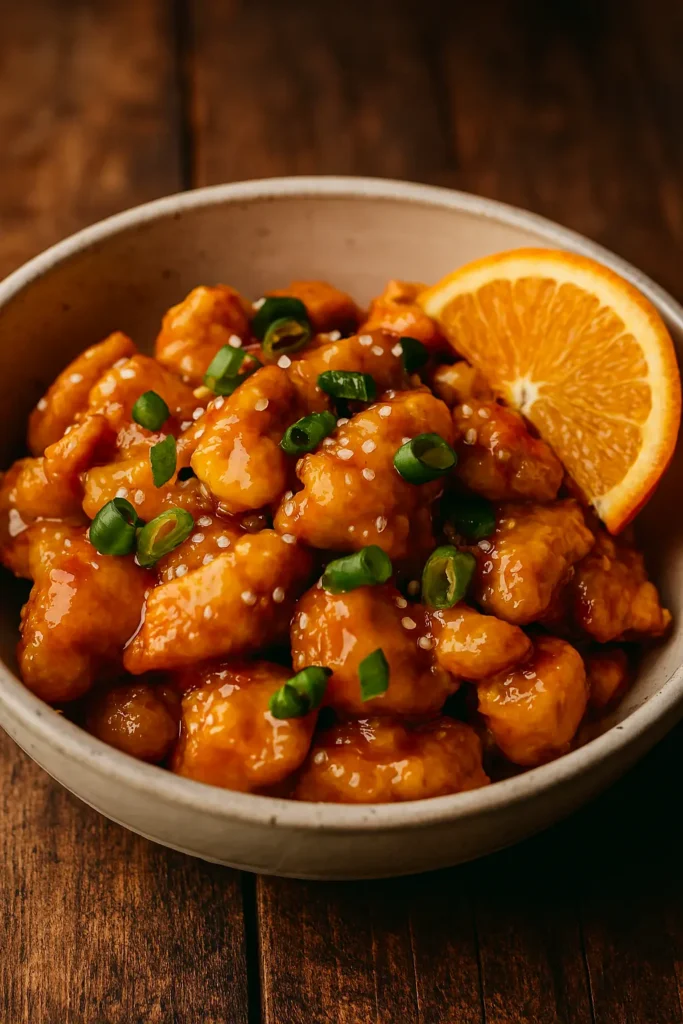
You’ll know your orange chicken is done when the pieces are crisp on the outside, golden in color, and firm to the touch. The internal temperature should hit 165°F (74°C). When tossed in sauce, they should stay coated but not soggy. The sauce should be glossy and slightly sticky, not watery. If it runs thinly off a spoon, simmer a bit longer. For a home test, slice one piece, the inside should be white and juicy, never pink or rubbery.
Variations and Toppings for Orange Chicken
Orange chicken invites endless creativity. Here are a few delicious ways to change it up:
Healthier Versions
- Air Fryer: Lightly coat chicken in cornstarch, spray with oil, and air fry at 390°F for 12–15 minutes, shaking halfway through.
- Baked: Bake coated chicken at 400°F for 20 minutes, flipping once. Then toss in warm orange glaze.
Sauce Twists
- Spicy Orange Chicken: Add extra red pepper flakes or a spoonful of chili paste for a fiery kick.
- Honey Orange Chicken: Swap half the sugar for honey for a floral sweetness.
- Orange Teriyaki: Mix in a little mirin or extra soy sauce for deeper umami.
Toppings & Garnishes
- Toasted sesame seeds
- Chopped scallions
- Crushed peanuts
- Fresh orange zest or wedges for brightness
Each variation tweaks the character of the dish, letting you tailor the flavor to your mood or guests.
Nutritional Insights
While orange chicken isn’t diet food, it can fit into a balanced lifestyle. One serving (about 1 cup) typically delivers around 350–400 calories, depending on frying method and sauce amount. Most of the calories come from the chicken and the glaze’s sugar. Using less oil, baking, or air frying significantly reduces fat. Swapping in low-sodium soy sauce and cutting the sugar makes it lighter. The orange juice provides vitamin C, while ginger and garlic bring anti-inflammatory benefits. Moderation is key, but so is enjoyment, savor every bite!
Pro Tips and Tricks for Perfect Orange Chicken
- Double Fry for Crispness: For restaurant-level crunch, fry chicken twice. First at 325°F for cooking through, then again at 375°F for that golden crisp texture.
- Zest First: Always zest your orange before juicing, it’s easier and you won’t waste that aromatic peel.
- Use Fresh Juice: Bottled orange juice can taste flat. Fresh juice brightens the sauce.
- Cornstarch Slurry Timing: Add it only once the sauce simmers; too early and it won’t thicken right.
- Keep Sauce and Chicken Separate Until Serving: If you want the crunch to last, coat only what you’ll eat immediately.
- Control the Sweetness: Adjust sugar to your liking, some prefer tangy, others candy-sweet.
- Garnish Wisely: A sprinkle of sesame seeds and scallions adds visual pop and texture.
Following these small adjustments transforms your home-cooked orange chicken into something that rivals takeout, maybe even beats it.
My Takes on Orange Chicken
When I make orange chicken, I lean toward tangy rather than sugary. I use fresh-squeezed orange juice, extra zest, and a bit more vinegar to sharpen the flavor. Sometimes, I add a pinch of smoked paprika for warmth or toss in blistered broccoli florets for color. The beauty of this dish is its flexibility. It’s as comforting on a rainy weeknight as it is crowd-pleasing at a weekend get-together.
Storage and Health Tips
If you have leftovers, cool them completely before storing. Place them in an airtight container and refrigerate for up to 3 days. The sauce will thicken slightly, but that’s easy to fix, reheat with a splash of water in a skillet over medium heat. Avoid microwaving if you want to keep the texture crisp.
To freeze, store cooked chicken and sauce separately in freezer-safe bags. Thaw overnight in the fridge, then warm gently on the stove.
For a lighter version, air-fry or bake your chicken instead of deep-frying. Use low-sodium soy sauce, and replace half the sugar with honey or fresh orange segments. Small tweaks make a big difference without sacrificing that signature flavor.
Frequently Asked Questions
Can I make orange chicken without deep frying?
Absolutely! Air frying or baking gives great results with less oil. It won’t be quite as crisp, but it’s still delicious.
Why does my sauce taste bitter?
You might’ve added too much zest or used the white pith from the orange. Stick to the outer, fragrant peel only.
What kind of orange juice works best?
Fresh-squeezed orange juice offers the brightest flavor. Store-bought can work, but choose one without added sugar or pulp.
Can I use chicken breast instead of thighs?
Yes, though thighs stay juicier. If using breasts, don’t overcook, remove once they reach 165°F.
How do I make it spicier?
Add chili flakes, sriracha, or a bit of sambal oelek to the sauce for heat.
Can I prepare it ahead of time?
You can make the sauce a day in advance and refrigerate it. Reheat gently before tossing with fresh-fried chicken.
What do I serve with orange chicken?
It pairs beautifully with steamed jasmine rice, fried rice, lo mein, or stir-fried vegetables like broccoli and snow peas.
How long does it keep?
Stored properly, it stays good up to 3 days in the fridge or 2 months in the freezer.
Before You Go
Now that you’ve mastered this homemade orange chicken, why not try similar recipes like Honey Garlic Shrimp, Sweet and Sour Chicken, or General Tso’s Chicken next? Each dish brings its own twist on that irresistible sweet-and-savory magic.
If you make this recipe, share your photos or thoughts, I love seeing your creations! Follow me on Pinterest for more easy Asian-inspired meals and comfort food favorites. Together, we’ll keep cooking fun, fresh, and full of flavor.
Note: For more informations on nutrition, visit the website: nutrition.gov or MyPlate.gov | U.S. Department of Agriculture